A house built brick by brick
The house near Mthatha was never one grand project. Nosipho Mthembu added to it as life allowed. Her teacher's salary paid for the first rooms. Her late husband's mine wages paid for the next. Over the years, the yard became the place where children played, cousins gathered and grandchildren knew exactly which kitchen door to use.
Nosipho is proud of what the family has built. Her son, Sipho, works in Gqeberha. Her daughter, Zanele, lives in East London. They visit when they can. But the question of what happens to the house after their mother dies has gone unspoken for years.
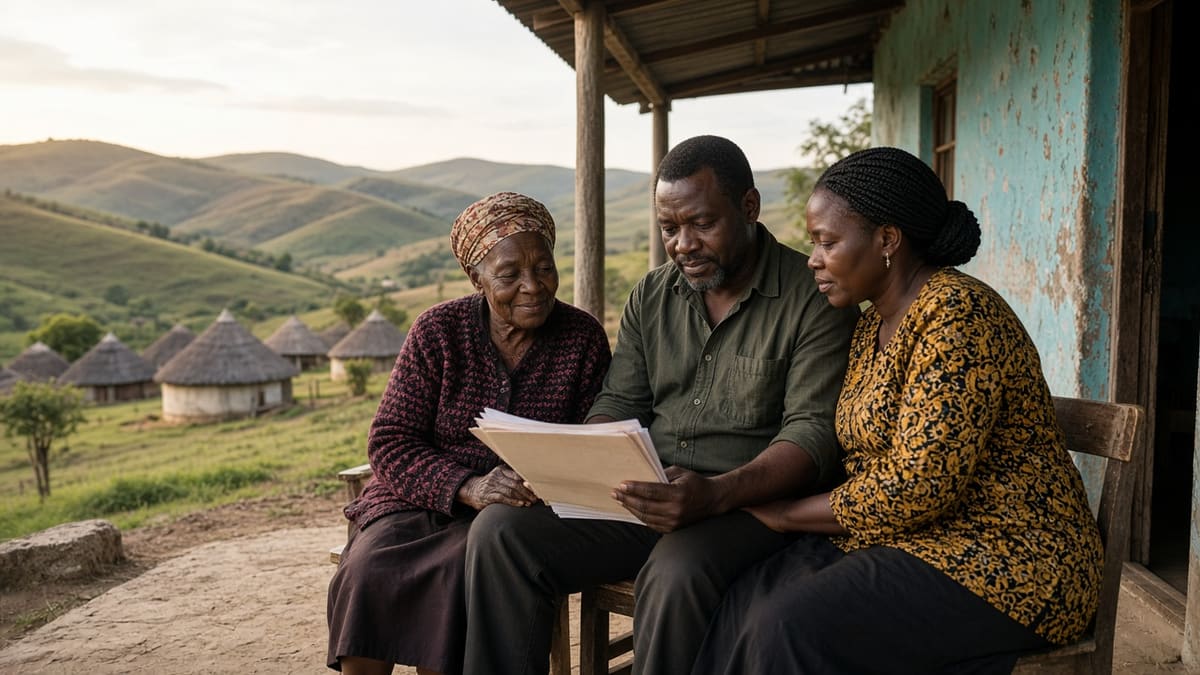
One afternoon, the three of them gathered on the stoep with a folder of papers. Sipho finally asked, gently: "Gogo, who gets the house?"
It was not a question about who loved her most. It was a question about protecting the family from uncertainty.
Why silence creates problems
Families often avoid talking about wills. The subject feels uncomfortable, too early or even disrespectful. Yet delay does not make the decisions disappear. It leaves more for relatives to untangle at a time when they are already grieving.
In South Africa, when someone dies without a valid will, the estate is usually divided under the rules of intestate succession. Those rules decide which relatives inherit, and in what shares. The result may not match what the person wanted. When several children inherit equal shares in one house, any one of them can ask for it to be sold.
Winding up an estate also follows a formal process. The estate is reported to the Master of the High Court, and an executor or representative is appointed where required. It takes time, and families often need documents that are hard to find in a hurry.
A family home is not always a simple asset
Nosipho's house holds memories. It is also a property with legal and practical details. The family needs to know how it is registered, whether anything is still owed on it, what rights apply to the land and whether anyone else has a legal interest.
Where land is held under communal or customary arrangements, extra rules may apply. The position depends on the type of rights and the legal framework behind them. A rural homestead cannot be assumed to transfer the same way as a registered suburban house.
That is why the family needs an attorney or fiduciary specialist who understands this particular property.
What a will can make clearer
A properly prepared will lets a person record how they want their estate divided and name an executor. It can also provide for the people they want to support.
The Wills Act sets strict rules for a valid will. The person making the will signs it in front of two competent witnesses, who are present at the same time and also sign. A competent witness must be at least 14 years old. Under South African law, an executor can witness a will, provided they are not also named as a beneficiary in the will. A witness, or their spouse, who also inherits under the will risks losing that inheritance, so beneficiaries are best kept off the witness list. A document found in a drawer is not valid simply because it says "will" at the top. An attorney or other qualified professional can draft or check it, and the family must know where the signed original is kept.
For Nosipho, the conversation is not about dividing the house while she still lives in it. It is about understanding her options and recording her wishes while she can explain them herself.
"I built this house for all of you. Now let me write down how."
Put the whole picture on the table
Sipho helped his mother list the property, her savings, her policies, her government pension and her regular commitments. They also wrote down who depends on her and what support she gives each month.
He used the Need at death view in MeerkatGenie to set her debts, her dependants and her existing policies side by side. Seeing everything in one place raised practical questions. Who will keep paying the rates and upkeep? Is there enough cash for the executor's fee, which can be up to 3.5% plus VAT, and the other estate costs? Does the funeral policy match the likely expenses, and who are the beneficiaries? Where are the identity documents, title deeds or permission-to-occupy papers an executor will need?
None of this replaced an attorney. MeerkatGenie does not draft wills or interpret land rights. It simply made the family's first legal consultation shorter, calmer and better prepared.
The conversation is part of the inheritance
The family left the stoep that afternoon without settling every detail. But they had done something important. They had started talking while Nosipho could still guide the discussion.
A clear estate plan is not only about assets. It reduces confusion, explains responsibilities and gives loved ones a better chance of carrying out a person's wishes.
As the sun went down behind the hills, Nosipho closed the folder. "Next month," she said, "we go to the attorney together. All three of you." Zanele squeezed her hand. For the first time, the question did not feel like a goodbye. It felt like a plan.
Read Who looks after the girls if I'm gone? A Mitchells Plain single dad works out his life insurance need for more on protecting family obligations.
MeerkatGenie does not give financial advice and promises no outcome. For advice, speak to an independent professional listed in the MeerkatGenie directory.
Editor's note: This is an illustrative composite story. The people in it are not real, and their words are not interviews or testimonials. All figures are an Illustrative sample.
Related articles
See what this could mean for your month
Build a free financial model on MeerkatGenie to test this life event with your own figures, or find an independent professional to talk it through.
Illustrative and educational only. Not a quote, not a contract, and not FAIS advice. Updated 27 November 2026.