A question at the dinner table
Thabo Mokoena has worked underground on the Free State goldfields for twenty-two years. He is 49. His wife Lineo teaches at a primary school in Thabong, and their son Kamohelo starts at a TVET college in January.
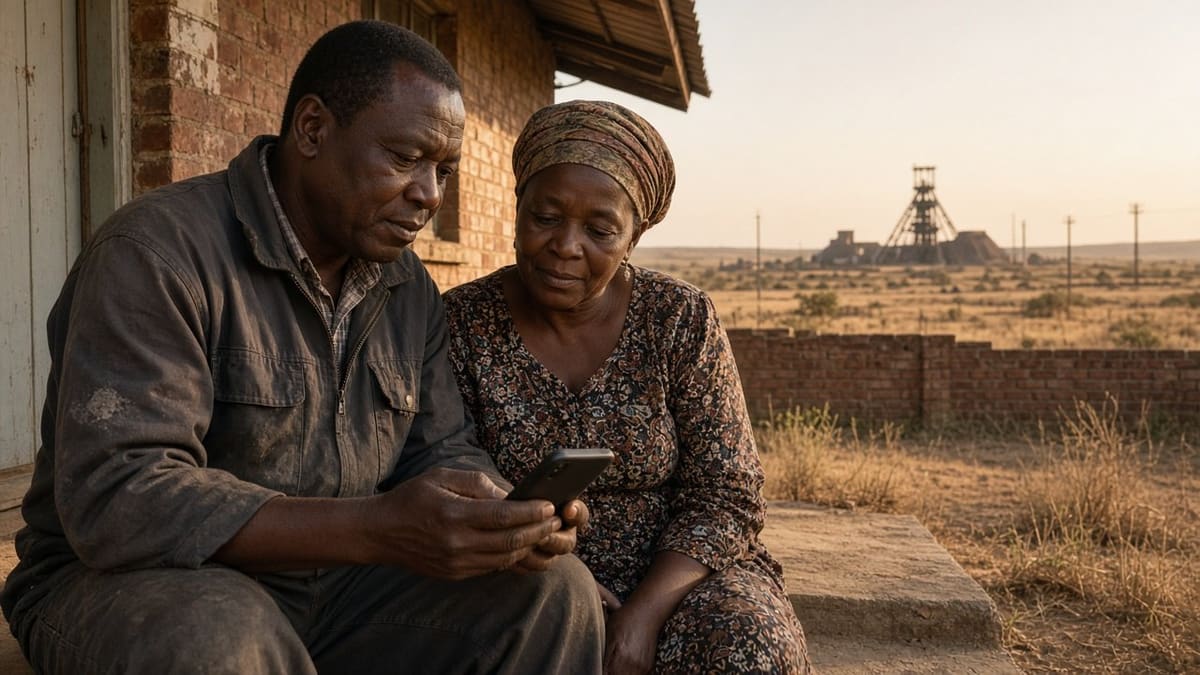
In September, a cousin told Thabo he could "take out the pension now" to pay for the college. Thabo was not sure. He opened his fund statement on his phone and saw three balances with names he did not recognise. "Vested. Savings. Retirement," he says. "I knew the total. I did not know which part I could reach."
The three components
Since 1 September 2024, South Africa's retirement funds run on the two-pot system. Most members now have up to three parts in their fund:
- The vested component holds savings built up before 1 September 2024, plus growth. The old rules still apply to it.
- The savings component receives one-third of contributions made from 1 September 2024. On the start date, funds also seeded it with 10% of the vested balance, capped at R30 000, as a once-off.
- The retirement component receives the other two-thirds of new contributions. It is meant for income in retirement.
"I thought the fund was one big pot I could open in an emergency. It turned out to be three pots with three sets of rules."
Door one: a savings withdrawal while still employed
You can withdraw from the savings component without leaving your job. The rules allow one withdrawal per tax year, with a minimum of R2 000. The fund needs a tax directive from SARS, and you need a tax number.
The withdrawal is added to your taxable income for the year and taxed at your marginal rate. It is not taxed on the more generous lump-sum tables.
| Item | Amount |
|---|---|
| Thabo's taxable income for 2026/27 | R300 000 |
| His marginal rate | 26% |
| Savings component balance | R24 000 |
| Tax on a R24 000 withdrawal | about R6 240 |
| Amount after tax | about R17 760 |
Illustrative
Fund administration fees may reduce the amount further. Any withdrawal also leaves less to grow for retirement.
Door two: leaving your job
When you resign, you can take the vested component as cash, or transfer or preserve it. Cash withdrawals before retirement use the SARS withdrawal table. For 2026/27, the first R27 500 across your lifetime is taxed at 0%, and the next band, to R726 000, is taxed at 18%.
The retirement component cannot be taken as cash when you resign. It must be preserved in the fund or transferred to another fund, such as a preservation fund or a new employer's fund.
Retrenchment is treated differently from resignation for tax. SARS treats a lump sum paid because of redundancy or retrenchment under the more favourable retirement table, where the first R550 000 across your lifetime is taxed at 0%.
Door three: retirement
Most fund rules allow retirement from age 55. At retirement, members can usually take up to one-third of the vested component as cash. The savings component can be taken in cash too. The retirement component, and the rest of the vested component, must buy an income such as a life annuity or a living annuity. Retirement lump sums are taxed on the retirement table, which starts with R550 000 at 0%.
What the Mokoenas worked out
Kamohelo's first-year college costs came to about R28 000, including fees, books and transport. The family sat down with Thabo's statement and listed the doors in order of cost.
A savings withdrawal of R24 000 would pay out about R17 760 after tax. Resigning was not an option. Lineo checked whether Kamohelo might qualify for NSFAS, which funds students at public universities and TVET colleges. Their combined income is below R350 000 a year, the NSFAS 2026 limit for a bursary, so he applied.
Thabo entered his fund balances in the Changing Jobs and Retirement need views on MeerkatGenie. He wanted to see what a withdrawal now would mean at 60, his planned retirement age. The difference was larger than he expected, because R24 000 left invested has eleven years to grow.
"I'm not saying never," Thabo says. "I'm saying not first."
Questions to ask your fund
- How much is in each component today?
- What fees apply to a savings withdrawal?
- How long does the fund take to process a claim once SARS issues a directive?
- Does the fund's rule allow early retirement from 55, and on what terms?
- Have you nominated beneficiaries, and are they up to date?
Your takeaways
- Your fund may hold three parts: vested, savings and retirement, each with its own rules.
- You can withdraw from the savings component once per tax year, with a minimum of R2 000, taxed at your marginal rate.
- On resignation, the vested component can be taken in cash under the withdrawal table, but the retirement component must be preserved or transferred.
- Retrenchment lump sums use the retirement table, with R550 000 taxed at 0% over your lifetime.
- Check other sources first, such as NSFAS for students at public institutions.
- Every withdrawal now means less capital at retirement, so compare both before you claim.
Editor's note: This is an illustrative composite story. The people in it are not real, and their words are not interviews or testimonials. All figures are an Illustrative sample.
Related articles
- Is R1 million enough to retire on? An eMalahleni couple tested the rule of thumb and found a gap
- Changing jobs? What happens to your pension, and what the cash really costs you
- Retrenched at 52: the first thirty days of a Vaal steelworker's money plan
MeerkatGenie does not give financial advice and promises no outcome. For advice, speak to an independent professional listed in the MeerkatGenie directory.
See what this could mean for your month
Build a free financial model on MeerkatGenie to test this life event with your own figures, or find an independent professional to talk it through.
Illustrative and educational only. Not a quote, not a contract, and not FAIS advice. Updated 27 November 2026.