Three wishes before sunrise
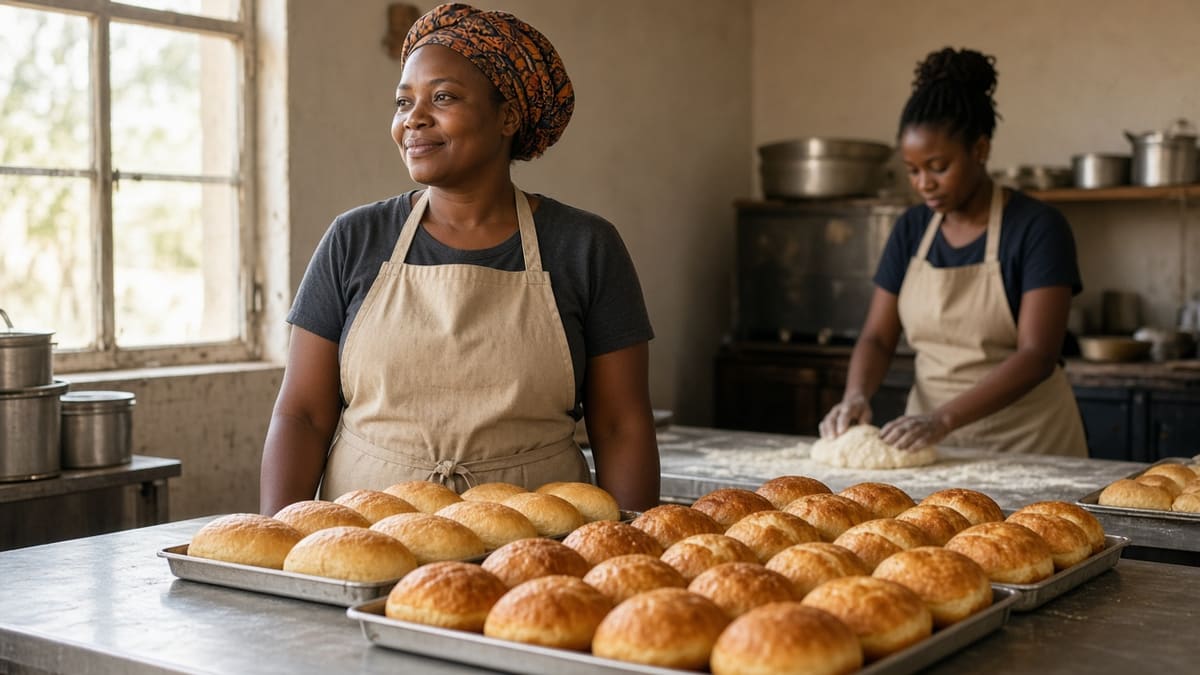
At four in the morning, most of Orlando East is still asleep. Nomvula Dlamini's kitchen is already warm. The oven is on, the first dough is rising and the day's trays are taking shape. By the time schoolchildren and early commuters pass her window, the smell of fresh vetkoek is part of the street's morning.
Her customers are taxi drivers, nurses off night shift and parents on the school run.
Ask Nomvula what she wants next and she laughs. "Three things. Another pair of hands. A second oven. And one week off in December."
Each wish sounds simple. Each one carries a financial consequence.
Wish one: another pair of hands
On paper, hiring her niece, Lerato, was the obvious next step. Nomvula was turning away orders. She could not prepare, bake, serve and take payments all at once. Twice last month, a taxi driver gave up waiting and left.
In her heart, it felt different. For six years, the bakery's bad weeks had been hers alone. If sales dropped, she ate less meat and skipped the hairdresser. A salary would change that. A bad week would no longer belong only to her.
"What if I hire her and then February comes?" she asked her sister one night, over tea that had gone cold. "How do I look my own niece in the face and say there is no money?"
Her sister did not have an answer. Nomvula lay awake most of that night, doing sums on the ceiling.
But a wage is not an extra bag of flour. It is due every month, in strong weeks and slow ones. So Nomvula estimated the full cost of employing someone, not only Lerato's take-home pay. She included training, hours, leave and payroll admin.
Being an employer also brings legal duties. Nomvula must register with the Unemployment Insurance Fund and pay UIF each month. The contribution is 2% of Lerato's pay: 1% deducted from her wage and 1% paid by the bakery. A kitchen with staff must also register with the Compensation Fund under COIDA, which pays out if a worker is injured on the job. A bookkeeper helped Nomvula set up both properly instead of relying on an informal arrangement.
In the Business budget view on MeerkatGenie, she added Lerato's wage and these costs as a new monthly commitment. Then she replayed last February, her slowest month, with the salary included. The question was not whether she could pay a salary when every tray sold. It was whether the bakery could carry it when customers were fewer. She also worked out how many extra trays a month would pay the full wage.
Wish two: a second oven
A second oven could lift production. It could also arrive before the orders do.
Nomvula compared two routes: save and pay cash, or finance it now. Cash avoids finance costs but delays growth. Finance brings the oven sooner, with another fixed monthly repayment.
An oven costing R18 000 might be bought from savings after six months, or bought sooner on finance with interest and fees. The better route depends on the real finance terms and the extra sales expected. Her business budget can show the cash flow of each route. It cannot promise that extra trays will find buyers.
So before deciding, Nomvula asked her regulars which products they wanted more often. A bigger oven only adds value if the bakery can sell what it bakes.
Wish three: a week off in December
This wish was the hardest for Nomvula to take seriously. She was used to being the person who kept everything moving. Closing for a week felt like losing income.
Slowly, she saw the trap. A business that needs its owner every hour is hard to grow and hard to leave. She set up a small monthly goal for her December break. She also started writing down the routines Lerato could run without her.
The goal was not a luxury holiday. It was one week in which the bakery could run without Nomvula doing every task herself.
"I wished for more hands. I got them. Then I learned that a salary arrives every month, even in a slow month."
The bakery and the family need different books
Nomvula had always used one account for family and business spending. Flour, electricity, school costs and groceries all came from the same place. When the account had money in it, she could not tell whether the bakery was profitable or simply carrying family costs.
A separate business account showed her what the bakery earned, what it cost to run and what it could fairly pay her. VAT registration only becomes compulsory once taxable supplies pass R2.3 million in any 12 months, so that line is still far off.
The first payday
Lerato started on a Monday in March. On the last Friday of the month, Nomvula counted out the wage, paid the UIF and stood for a moment in the empty kitchen.
The fear had not gone. But it had changed shape. It was no longer a fear of the unknown. It was a known cost, planned for, in a month she had already tested.
That evening, Lerato took over the till while Nomvula went home before dark for the first time in years. Her son looked up from his homework, surprised. "Ma? Are you sick?"
"No," she said, and laughed. "I have staff."
MeerkatGenie does not give financial advice and promises no outcome. For advice, speak to an independent professional listed in the MeerkatGenie directory.
Editor's note: This is an illustrative composite story. The people in it are not real, and their words are not interviews or testimonials. All figures are an Illustrative sample.
Related articles
- What does it really cost to open a small business in South Africa? One Umlazi salon owner counts every rand
- How much money does it take to go out on your own? A Pretoria plumber added it up before he left
- Leaving a salary for a food truck: the six questions a Mbombela chef answered before she resigned
See what this could mean for your month
Build a free financial model on MeerkatGenie to test this life event with your own figures, or find an independent professional to talk it through.
Illustrative and educational only. Not a quote, not a contract, and not FAIS advice. Updated 27 November 2026.