A second route
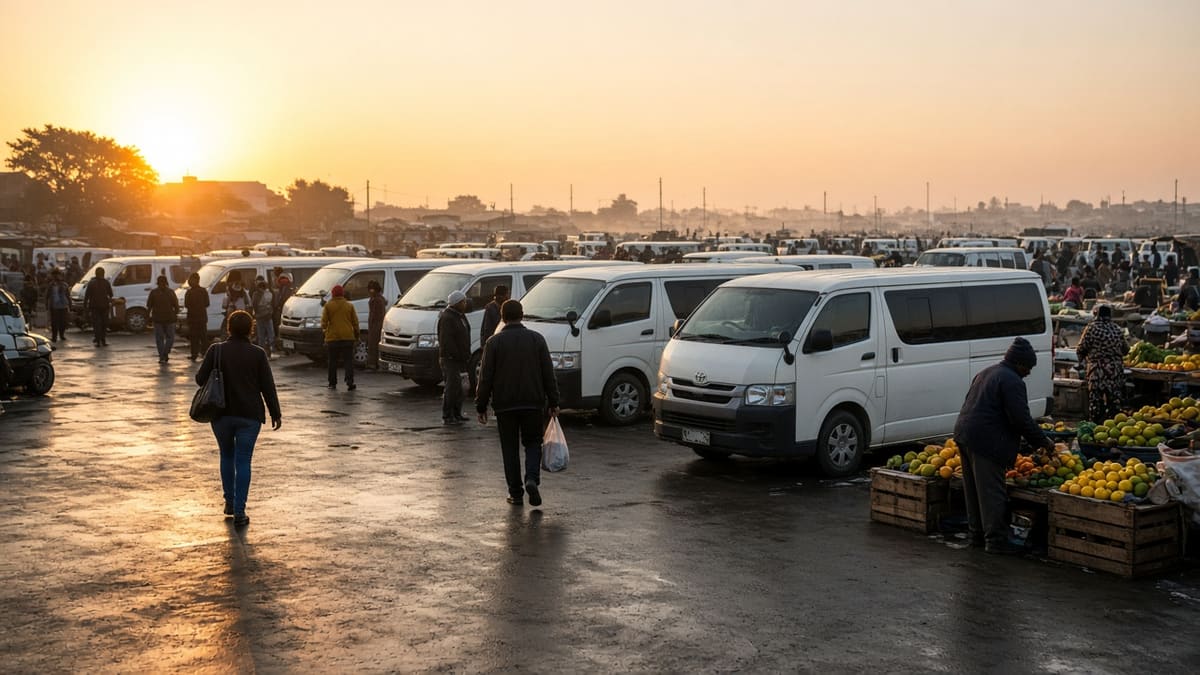
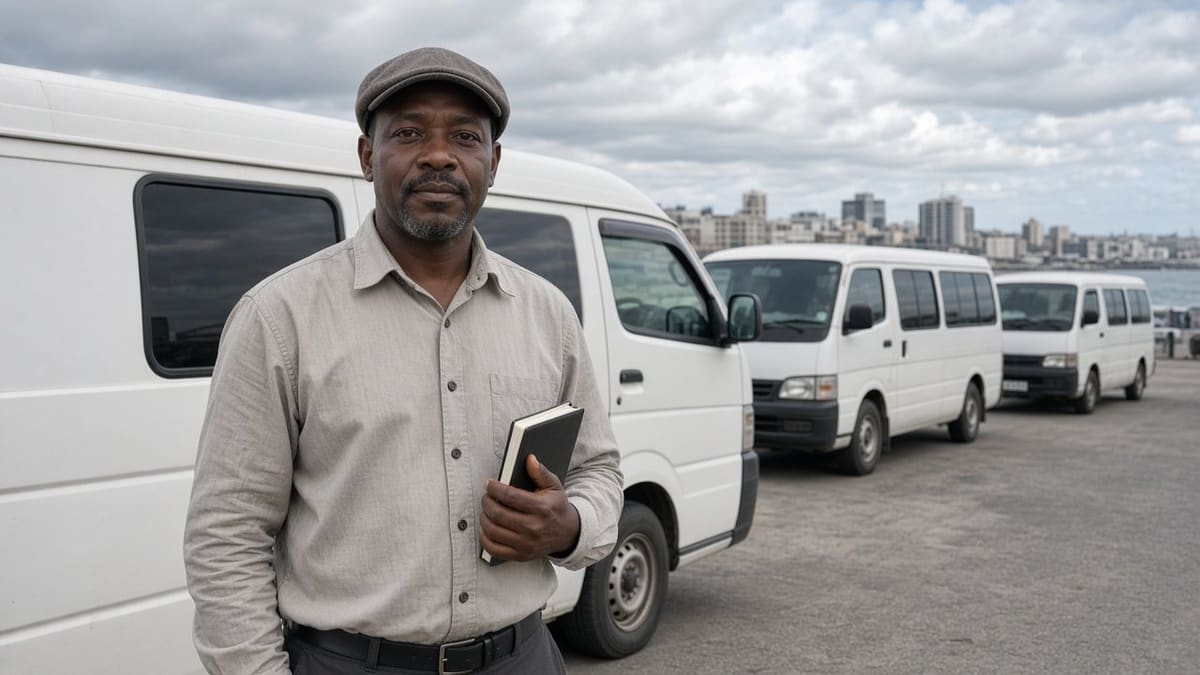
Luvuyo Gqola has owned a minibus taxi in East London for eleven years. He is 47. His one vehicle runs a route between Mdantsane and the city centre, driven by a driver he employs. Luvuyo manages the business and drives on Saturdays.
His association offered him a second route this year. To run it, he needs another minibus, priced at R620 000. Over the years, he has saved R720 000 in a money market account earning about 7% a year. "I had the cash," he says. "The question was whether I should spend it."
Option one: pay cash
Paying cash means no interest and no monthly instalment. But it also means the R620 000 stops earning interest, and his savings drop to R100 000.
R620 000 left in the money market account at 7% for five years would grow by about R249 600 before tax. That is the return Luvuyo gives up by paying cash. Interest is taxable above the R23 800 annual exemption for people under 65, so the after-tax figure would be lower.
"I could pay cash and sleep badly, or finance it and pay the bank. I needed to see what each one cost me in rand."
Option two: finance the full price
Luvuyo asked for a quote on vehicle finance over five years.
| Item | Amount |
|---|---|
| Amount financed | R620 000 |
| Monthly instalment | about R14 270 |
| Total repaid | about R856 000 |
| Total interest | about R236 000 |
Illustrative
At first glance, the two costs look close: about R236 000 in interest against about R249 600 in lost growth before tax. After tax on the interest he would have earned, paying cash comes out somewhat cheaper. But the comparison leaves out something important.
What happens to the safety net
A minibus business has lumpy costs. An engine rebuild, an accident or a month off the road can cost tens of thousands of rand at once. If Luvuyo paid cash, his savings would fall to R100 000. One major breakdown could take most of it.
With finance, his savings would stay at R720 000, but he would need to pay R14 270 a month from the business. In a bad month for passengers, that instalment would still be due.
Option three: a middle path
Luvuyo tested a 50% deposit.
| Item | Amount |
|---|---|
| Monthly instalment | about R7 130 |
| Total interest | about R118 000 |
| Savings left after the deposit | R410 000 |
Illustrative
This halved the interest and the instalment, and left him a strong cash reserve.
Tax on a business vehicle
Because the minibus is a business asset, the tax position differs from a private car. A business can generally deduct finance charges on money borrowed to earn income, and claim a wear-and-tear allowance on the vehicle over time. Luvuyo asked his tax practitioner how these would apply to his taxi business, since the rules depend on how the business is set up and how the vehicle is used.
The questions he asked
Luvuyo wrote down what mattered beyond the interest bill:
- How much cash does the business need on hand for breakdowns and slow months?
- Can the second route's income pay the instalment, even in a weak month?
- Does the finance agreement allow early settlement without heavy penalties?
- What insurance does the lender require on a financed vehicle?
- Would the second route need a new driver from day one?
How he decided
Luvuyo entered the three options in the Purchasing a Vehicle view on MeerkatGenie, with the finance terms and running costs. He used the Emergency buffer view to see how many months of business and family costs each option would leave in savings. Paying cash left about two months. The middle path left about eight.
He chose the middle path. The second minibus started on the new route in September.
"Cash is cheaper on paper," he says. "But a taxi that is off the road earns nothing, and I want to be able to fix it the same day."
Questions to compare your own options
- What interest would you pay on finance, in total?
- What would your savings earn if you left them invested, after tax?
- How much cash would remain after paying cash or a deposit?
- Could your income carry the instalment in a bad month?
- If the vehicle is for business, what tax treatment applies to finance charges and wear and tear?
Your takeaways
- Paying cash avoids interest but gives up the return your savings would earn.
- Compare total interest on finance with after-tax growth on your savings.
- Keep enough cash for breakdowns and slow months, whichever option you choose.
- A large deposit can cut the interest and instalment while keeping a reserve.
- Business vehicles may qualify for tax deductions on finance charges and wear and tear.
- Check early settlement terms before you sign a finance agreement.
Editor's note: This is an illustrative composite story. The people in it are not real, and their words are not interviews or testimonials. All figures are an Illustrative sample.
Related articles
- How much car can a first salary afford? A Rustenburg graduate priced two cars beyond the instalment
- The balloon at the end: what a Midrand sales rep learned before he signed a 30% residual deal
- How big should your emergency fund be? What one Kimberley family learned the week the geyser burst
MeerkatGenie does not give financial advice and promises no outcome. For advice, speak to an independent professional listed in the MeerkatGenie directory.
See what this could mean for your month
Build a free financial model on MeerkatGenie to test this life event with your own figures, or find an independent professional to talk it through.
Illustrative and educational only. Not a quote, not a contract, and not FAIS advice. Updated 27 November 2026.